
Why High-Flex Wire Harnesses Matter in Robotic Applications
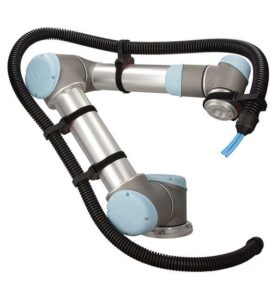 As industrial robotics continues to transform modern manufacturing, the demand for reliable and durable electrical connectivity has never been higher. From robotic arms on assembly lines to automated material handling systems, every robotic application depends on stable power and signal transmission to operate efficiently. One critical component that directly affects robotic performance is the wire harness — especially high-flex wire harnesses designed specifically for continuous movement environments.
Unlike traditional cable assemblies, robotic wire harnesses must withstand constant bending, twisting, vibration, and repetitive motion. In high-speed automation systems, standard wiring solutions often fail prematurely, leading to costly downtime and maintenance issues. This is why high-flex wire harnesses have become essential in modern robotic applications.
The Challenges of Robotic Motion
Industrial robots rarely remain stationary. Robotic arms may rotate thousands of times per day while performing precise movements in welding, packaging, assembly, or inspection operations. Every movement places stress on the cables and connectors inside the system.
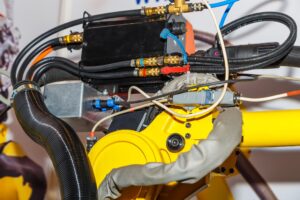
Over time, ordinary wires can experience:
- Conductor fatigue
- Insulation cracking
- Signal instability
- Connector loosening
- Internal wire breakage
These issues may seem minor at first, but in automated production environments, even a small wiring failure can stop an entire production line.
High-flex wire harnesses are engineered to solve these problems by providing enhanced durability and long-term mechanical reliability under dynamic motion conditions.
What Makes High-Flex Wire Harnesses Different?
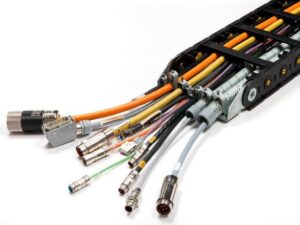
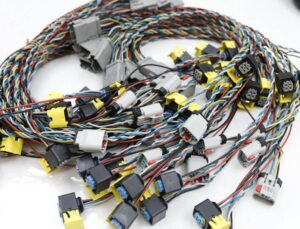 High-flex wire harnesses are specifically designed for applications involving continuous movement and repetitive bending cycles. Compared to standard harnesses, they use specialized materials and construction methods that improve flexibility and lifespan.
Key design features often include:
Flexible Conductors
High-strand-count conductors allow the cable to bend repeatedly without breaking. This significantly reduces the risk of conductor fatigue in robotic systems.
Durable Insulation Materials
Advanced insulation materials such as TPU or TPE offer excellent resistance to abrasion, oil, heat, and chemicals commonly found in industrial environments.
Optimized Bend Radius
Proper cable routing and bend radius design help minimize stress concentration during robotic movement.
Strain Relief Protection
Additional strain relief structures help protect connectors and cable entry points from excessive pulling or twisting forces.
Together, these features help robotic systems maintain stable electrical performance even after millions of motion cycles.
Improving Reliability in Industrial Automation
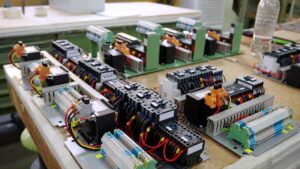 In robotic automation, reliability directly impacts productivity. Unexpected downtime caused by cable failures can result in delayed production schedules, increased labor costs, and expensive maintenance.
High-flex wire harnesses help manufacturers improve operational reliability by:
- Reducing cable fatigue failures
- Maintaining consistent signal transmission
- Supporting high-speed robotic movement
- Minimizing unplanned maintenance
- Extending equipment service life
For industries operating 24/7 production lines, these advantages are especially important.
Applications Across Multiple Industries
High-flex wire harnesses are widely used in various industrial automation sectors, including:
- Robotic welding systems
- Automated packaging equipment
- CNC machinery
- Material handling robots
- Semiconductor manufacturing
- Automated inspection systems
- Collaborative robots (cobots)
As automation systems become more advanced, the complexity of robotic wiring requirements continues to increase. Many OEM manufacturers now prefer custom wire harness solutions tailored to their specific robotic applications.
Why Customization Matters
Every robotic system has unique movement patterns, installation constraints, and environmental conditions. A standard off-the-shelf harness may not provide the durability or flexibility required for long-term operation.
Custom high-flex wire harness solutions allow manufacturers to optimize:
- Cable length and routing
- Connector configurations
- Shielding requirements
- Flex cycle performance
- Environmental resistance
Well-designed custom harnesses not only improve reliability but also simplify installation and future maintenance.
Final Thoughts
As robotics and industrial automation continue to evolve, the importance of reliable electrical connectivity cannot be overlooked. High-flex wire harnesses play a critical role in ensuring robotic systems operate smoothly, safely, and efficiently under continuous motion conditions.
For OEMs and automation equipment manufacturers, investing in high-quality high-flex wire harness solutions can significantly reduce downtime, improve equipment lifespan, and enhance overall production efficiency.